Complaints Procedure for Chigwell Skip Hire
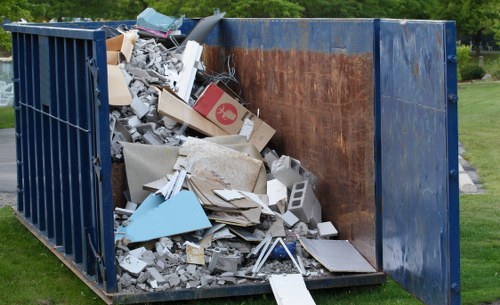 Purpose and scope. This complaints policy describes how Chigwell Skip Hire and associated skip and rubbish removal services manage, investigate and resolve complaints. It applies to all aspects of our skip hire service, including delivery, collection, site behaviour, charges and the handling of waste during rubbish collection and disposal. The aim is to make the process clear, fair and timely for customers and to use findings to improve service quality.
We accept complaints from any customer or authorised representative about our skip hire Chigwell operations. Complaints can relate to safety incidents, perceived damage, missed collections, delays in placement or removal, billing disputes, or concerns regarding how waste was managed. All complaints are handled without prejudice and treated with confidentiality where appropriate.

How to raise a complaint
To make a complaint you should provide clear details of the issue, including dates, locations and relevant booking or reference numbers if available. While this page does not contain contact details, every formal complaint should include: a concise description of the problem, what outcome you seek, and any documentary evidence such as photographs or invoices. Complaints may be made by customers who used the rubbish collection service or by third parties authorised to raise issues on behalf of a customer.Acknowledgement and initial assessment
Upon receipt of a complaint, our customer relations team will acknowledge it promptly and assign it a unique reference. We will perform an initial assessment to confirm the complaint is within scope and to identify any immediate safety or environmental concerns that require urgent action. The initial assessment outlines the expected timescale for a fuller investigation and informs the complainant of the next steps. Investigation process. Investigations are proportionate to the seriousness and complexity of the complaint. Typical actions include reviewing booking records, vehicle tracking and driver logs, interviewing staff, examining CCTV or photographs, and checking waste transfer documentation. Where necessary we may arrange independent inspection by a third party to verify damage or site conditions. Our objective is to gather sufficient facts to reach a fair, evidence-based decision.
We aim to resolve straightforward complaints within 5-10 working days. More complex matters that require detailed investigation or third-party input may take longer; in such cases we will keep the complainant informed of progress and provide a realistic estimate of the time needed to conclude the investigation.
 Outcomes and remedies. If a complaint is upheld, remedies may include: a formal apology, corrective action such as re-collection or replacement of a skip, a partial or full refund, or agreed compensation for verified losses. Remedies are chosen to redress the harm reasonably and to prevent recurrence. If the complaint is not upheld, we will explain the reasons and present the evidence relied upon.
Where service failures involve safety or regulatory non-compliance, we will take appropriate internal and external reporting actions. Continuous improvement is a priority: insights from upheld complaints feed into staff training, operational changes, or policy updates to reduce the likelihood of similar issues reoccurring in our skip hire operations.
 Escalation and review. If a complainant remains dissatisfied after receiving the outcome, they may request an internal review. An escalation will be handled by a senior manager not involved in the original decision. The internal review will consider any new evidence and re-examine the investigation process to ensure impartiality. Final internal reviews will be completed within a defined timeframe and the outcome will be communicated in writing.
Record keeping and transparency. All complaints are logged and retained in line with our records policy to allow trend analysis and to demonstrate accountability. We collect anonymised data on complaint types, response times and outcomes. This information supports regular performance reviews and helps refine our rubbish removal and customer care procedures.
Confidentiality and impartiality. We recognise the importance of fair treatment for all parties. Investigations are conducted impartially; information is shared only as necessary for the investigation and resolution. Personal data supplied as part of a complaint is handled according to privacy standards and only used for legitimate complaint-handling purposes.
Continuous improvement and learning. Complaints are viewed as opportunities to strengthen our services. We monitor trends in issues reported across our skip hire and collection operations and implement targeted training, operational adjustments and policy updates to reduce recurrence. Lessons learned are communicated internally to drivers, depot staff and the customer relations team to raise service standards.
Accessibility and support. We strive to make the complaints process accessible to all customers. Support is available for those who may need help preparing a complaint or supplying evidence. Language support and reasonable adjustments are considered where required to ensure that the complaints process is fair and inclusive.
Monitoring and reporting. Senior management regularly reviews complaint statistics as part of governance reporting. This oversight ensures complaints are not only resolved but also used strategically to enhance reliability, compliance and customer satisfaction across our skip hire service area.
Final note. Our complaints procedure is designed to be prompt, transparent and constructive. We encourage customers to raise concerns so we can address them and continue improving our skip hire and rubbish collection services. A clear, recorded process helps ensure every complaint is taken seriously and dealt with in a respectful, evidence-based manner.
- Key elements: acknowledgement, investigation, outcome, remedy, escalation.
- Service focus: delivery, collection, safety, billing and waste handling.
- Commitment: fairness, confidentiality and continuous improvement.